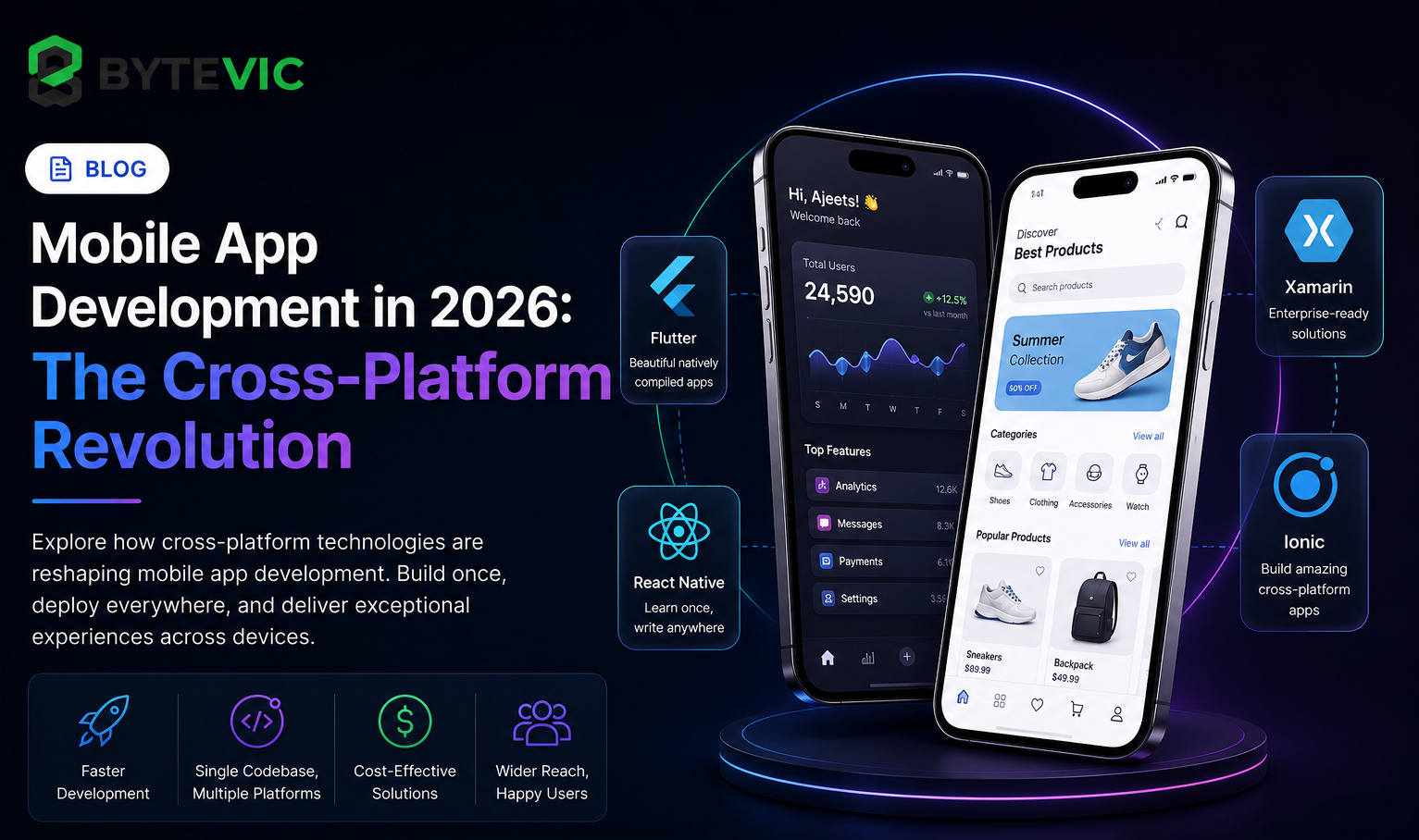
The line between native and cross-platform performance has been erased. With major rendering upgrades and direct C++ integrations, cross-platform apps now feel completely native while allowing teams to maintain a single codebase.
1. React Native: Fabric & JSI Engine
React Native has replaced the old bridge architecture with the **JavaScript Interface (JSI)**. This allows JavaScript code to call native C++ APIs directly, meaning user interface components render with zero bridge latency. Smooth transitions and lists now run easily at 120Hz refresh rates.
ByteVic Native Testing:
Our benchmarking lab at ByteVic evaluated React Native's Fabric renderer against Native Swift. Memory overhead differed by less than 3%, proving that cross-platform is ready for complex graphics.
2. Flutter: Shader Compilation with Impeller
Flutter's new **Impeller** rendering engine solves the long-standing issue of "shader compilation jank." By pre-compiling all shader instructions during application build time, animations load instantly and run smoothly without drop frames.
3. On-Device Machine Learning
Mobile devices possess high-performance neural engines. Modern apps process data locally using CoreML or TensorFlow Lite instead of calling cloud APIs. This keeps user data secure and allows real-time camera tracking and audio analysis to function offline.
Choose the Right Stack
At ByteVic Systems, we build high-end mobile apps tailored to your business needs. Contact our engineering team to select the ideal platform for your next mobile product launch.