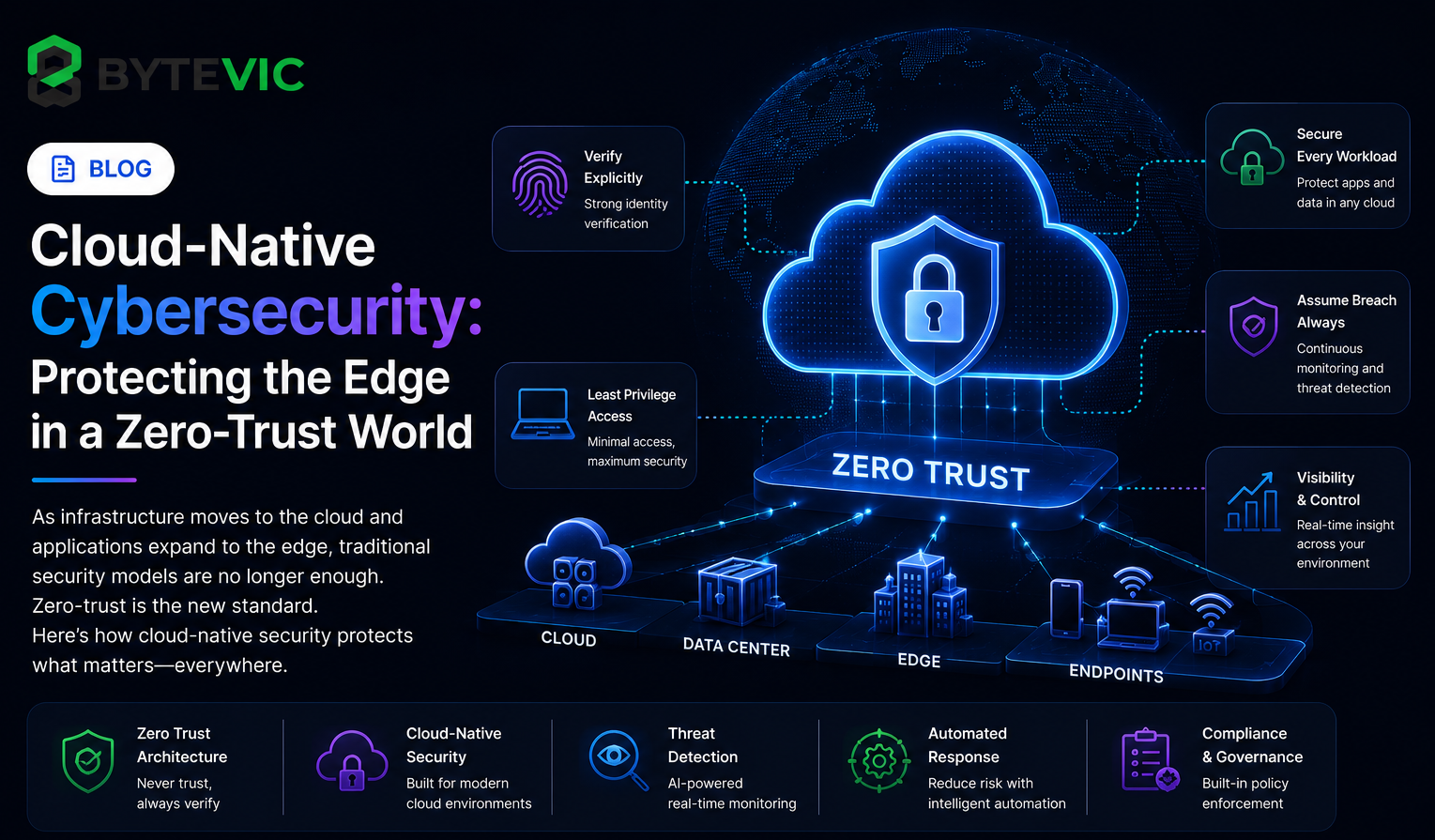
The corporate network perimeter no longer exists. With remote systems, mobile connections, and cloud APIs, you must assume that threats are present inside and outside your network: never trust, always verify.
1. Identity as the Security Boundary
Zero Trust treats user identity and device integrity as the core security boundary. Every database request and microservice call is authenticated and encrypted using **Mutual TLS (mTLS)** and **OAuth2/OIDC** protocols.
ByteVic Security Protocol:
Our cloud security audits at ByteVic verify that all container registries run automated CVE (vulnerability) scans during CI/CD, blocking deployments with critical security flags.
2. Workload Isolation & Network Policies
If a single web application is compromised, hackers should not gain access to internal billing databases. Micro-segmentation restricts service communication. Using Kubernetes network policies, we block all lateral traffic unless explicitly permitted.
3. Automated Threat Intel
Security tools analyze server metrics in real-time. If an API key is used from an unusual location or starts querying massive amounts of database rows, security policies automatically revoke the session token and alert operators.
Conclusion
At ByteVic Systems, we build secure, enterprise-grade cloud environments. Contact our team to perform a detailed security check and fortify your cloud workloads.